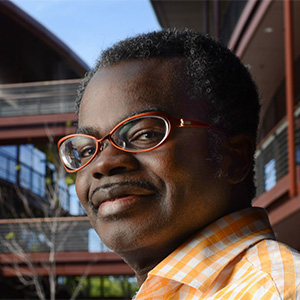
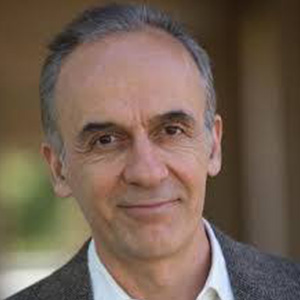
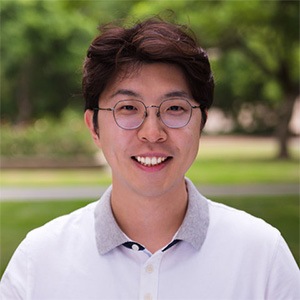
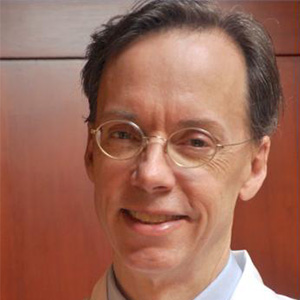
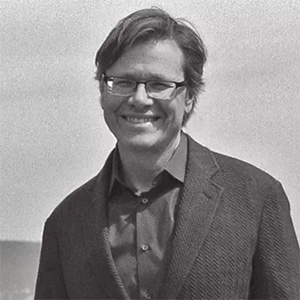
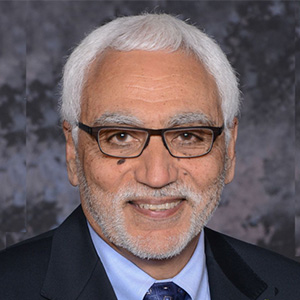
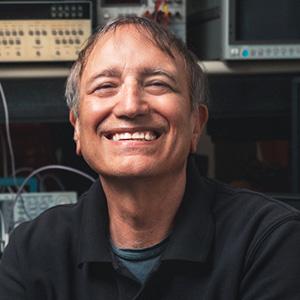
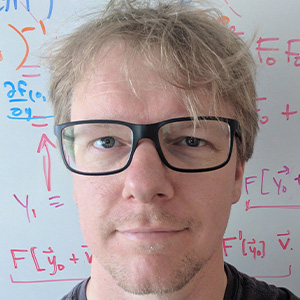
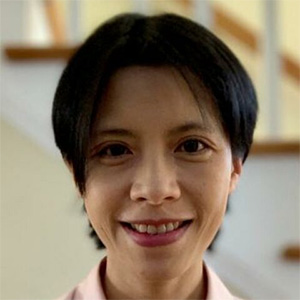
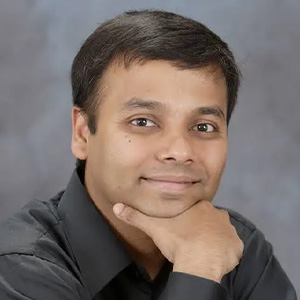
Kwabena Boahen is a Professor of Bioengineering and Electrical Engineering at Stanford University and director of the Brains in Silicon lab, where he develops silicon circuits that emulate neural computation. His pioneering research in neuromorphic engineering includes creating Neurogrid, an iPad-sized platform mimicking the cerebral cortex at unprecedented scale and detail. He has received numerous prestigious awards, including the Packard Fellowship for Science and Engineering and the NIH Director’s Pioneer Award, and is a fellow of both the American Institute for Medical and Biological Engineering and the IEEE. His work bridges neurobiology, engineering, and computational modeling, with broad impact evidenced by over 100 publications and a widely viewed TED talk
Jeannette Bohg
Jeannette Bohg is an Assistant Professor of Computer Science at Stanford University, following her role as a group leader at the MPI for Intelligent Systems' Autonomous Motion Department. Her research focuses on perception and learning for autonomous robotic manipulation and grasping, particularly developing methods that are goal-directed, real-time, and multi-modal to provide meaningful feedback for execution and learning. She has received several prestigious accolades, including the 2019 IEEE Robotics and Automation Society Early Career Award, the 2019 IEEE International Conference on Robotics and Automation (ICRA) Best Paper Award, and the 2017 IEEE Robotics and Automation Letters (RA-L) Best Paper Award.
Stephen Boyd
Stephen P. Boyd, the Samsung Professor of Engineering at Stanford University, focuses his research on convex optimization applications in control, signal processing, machine learning, and finance. He is the author of four influential books, including the foundational text Convex Optimization (with Lieven Vandenberghe), and his group has created widely used open-source software tools like CVX and CVXPY. His seminal work is recognized with numerous honors, including the highest recognition for a US control systems engineer, the AACC Richard E. Bellman Control Heritage Award (2023), and the IEEE Control Systems Award (2013). Professor Boyd is a Fellow of the IEEE, SIAM, and IFAC, a member of the US National Academy of Engineering (NAE), and has been invited to deliver over 90 plenary and keynote lectures.
Mark Brongersma
Director, Geballe Laboratory for Advanced Materials (GLAM), Stephen Harris Professor, Professor of Materials Science and Engineering and, by courtesy, of Applied Physics. His current research is directed towards the development and physical analysis of nanostructured materials that find application in nanoscale electronic and photonic devices.
Emmanuel Candes
Emmanuel Candès, the Barnum-Simons Chair in Mathematics and Statistics at Stanford University, is a prominent researcher in computational harmonic analysis, statistics, information theory, and signal processing. His work applies to areas such as imaging sciences, scientific computing, and inverse problems. Candès has been the recipient of numerous accolades, most notably the Alan T. Waterman Award from the NSF, which is the highest honor given by the foundation to early-career scientists. His distinguished career led to his election to both the National Academy of Sciences and the American Academy of Arts and Sciences in 2014.
E.J. Chichilnisky
E.J. Chichilnisky, the John R. Adler Professor of Neurosurgery and Professor of Ophthalmology at Stanford University, is a former researcher at the Salk Institute for Biological Studies. His research focuses on understanding the spatiotemporal patterns of electrical activity in the retina that transmit visual information to the brain, investigating their origins using large-scale multi-electrode recordings. Currently, his work is centered on using basic science knowledge and electrical stimulation to develop a novel high-fidelity artificial retina for treating incurable blindness.
Joonhee Choi
Joonhee Choi is an Assistant Professor of Electrical Engineering and a Terman Faculty Fellow in the School of Engineering at Stanford University. His core research focuses on engineering the dynamics of quantum many-body systems to explore fundamental science and develop practical quantum applications. His expertise spans a wide range of fields, including nonlinear nano-optics, solid-state and atomic physics, with practical applications in quantum metrology, communication, and information processing. Professor Choi's notable honors include the AFOSR Young Investigator Program (YIP) Award (2025), the Outstanding Young Researcher Award (2021) from the Association of Korean Physicists in America, and the Terman Faculty Fellowship (2023) at Stanford.
Daniel Congreve
Daniel Congreve is an Assistant Professor in the Department of Electrical Engineering at Stanford University. His research focuses on engineering nanomaterials to solve challenging problems, drawing on his doctoral work at MIT on photonic energy conversion using processes like singlet fission and triplet fusion. Before Stanford, he was a Rowland Fellow at the Rowland Institute and completed his Ph.D. at MIT. Dan is a recipient of several distinguished awards, including the Moore Inventor Fellow and the Sloan Research Fellow, and he is also an Intel Rising Star. Furthermore, he is the co-founder of Quadratic3D, a startup aimed at commercializing 3D printing technologies.
Daniel Bruce
Daniel Bruce is a Professor in the Department of Radiology at Stanford University, specializing as an MRI scientist for nearly twenty years. His research focuses on developing advanced translational cardiovascular MRI methods for quantitatively assessing structure, function, flow, and remodeling in both adult and pediatric populations. His independent research program began with an NIH K99/R00 award focused on "Myocardial Structure, Function, and Remodeling in Mitral Regurgitation," following his Ph.D. at Johns Hopkins and a postdoc at Stanford. He previously led NIH-funded studies at UCLA and now also serves as the Director of Radiology Research for the Veterans Administration Palo Alto Health Care System.
David Donoho
David Donoho is a mathematician and Professor of Statistics at Stanford University, widely recognized for his fundamental contributions to theoretical and computational statistics, signal processing, and harmonic analysis. His algorithms have significantly advanced the understanding of sparse data description and the structure of robust procedures, including coining the notion of compressed sensing, which is now vital for rapid MRI imaging. Donoho has received numerous prestigious awards for his work, including the 2018 Carl Friedrich Gauss Prize and the 2013 Shaw Prize for Mathematics. Among his other major honors are a MacArthur Fellowship (1991), the COPSS Presidents' Award (1994), and the John von Neumann Prize (2001).
Leora Dresselhaus-Marais
Leora Dresselhaus-Marais is an Assistant Professor of Materials Science & Engineering at Stanford University whose research focuses on sustainable materials processing and manufacturing, particularly by designing new microscopes to get a deeper view into metallic materials' properties, with key thrusts in sustainable steelmaking (ironmaking) and metal 3D printing. Her influential work, which also includes studying shock waves in materials from her PhD at MIT and time-resolved defect dynamics as a Lawrence Fellow at LLNL, has been recognized with the Young Investigator Research Program (YIP) Award from the AFOSR (2023) and the DOE Early Career Award (2023).
Abbas El Gamal
Abbas El Gamal is the Hitachi America Professor of Electrical Engineering at Stanford University. His extensive research contributions span network information theory, FPGAs, and digital imaging devices and systems. He is the co-author of the definitive book Network Information Theory and holds 35 patents in these areas. For his work, he has received numerous awards, including the prestigious 2016 Richard W. Hamming Medal and the 2012 Claude E. Shannon Award. He is a member of the U.S. National Academy of Engineering and a Fellow of the IEEE.
Stefano Ermon
Stefano Ermon, an Associate Professor in Stanford's Department of Computer Science (affiliated with the AI Lab and the Woods Institute), centers his research on scalable and accurate inference in graphical models, statistical modeling, large-scale combinatorial optimization, and robust decision making under uncertainty. This work is primarily motivated by applications in the emerging field of computational sustainability. Key awards and honors received include the Sloan Research Fellowship, the IJCAI Computers and Thought Award, the Microsoft Research Faculty Fellowship, the NSF CAREER Award, and the ONR and AFOSR Young Investigator Awards. .
Jonathan Fan
Jonathan Fan is an Assistant Professor in the Department of Electrical Engineering at Stanford University, where he is researching new design methodologies and materials approaches to nanophotonic systems. He received his bachelor’s degree with highest honors from Princeton University and his doctorate from Harvard University. He is the recipient of the Air Force Young Investigator Award, Sloan Foundation Fellowship in Physics, Packard Foundation Fellowship, and the Presidential Early Career Award for Scientists and Engineers.
Shanhui Fan
Shanhui Fan is the Joseph and Hon Mai Goodman Professor of Electrical Engineering at Stanford, specializes in fundamental research on nanophotonic structures, including photonic crystals and meta-materials, with a focus on their applications in energy and information technology. His key research contributions include groundbreaking work in radiative cooling, which demonstrated that the coldness of space can be used as a new energy source. For his foundational discoveries, he has received major awards, notably the R. W. Wood Prize, the Simons Investigator in Physics, and the Vannevar Bush Faculty Fellowship. He is a distinguished member of both the National Academy of Sciences (NAS) and the National Academy of Engineering (NAE).
Kayvon Fatahalian
Kayvon Fatahalian is an Associate Professor in the Computer Science Department at Stanford University and a member of the Wu Tsai Human Performance Alliance. His research focuses on designing systems for real-time graphics, developing high-efficiency simulation engines for applications in entertainment and AI, and creating platforms for the scalable analysis of images and videos. His expertise involves creating high-performance computing systems, exemplified by his work on projects like the Madrona Engine for simulating virtual environments at high throughput.
Ron Fedkiw
Ron Fedkiw, a Professor in Computer Science at Stanford and a member of Bio-X and ICME, focuses his research on developing new computational algorithms for a variety of complex applications, including computational fluid dynamics, computer graphics, and biomechanics. His pioneering work in physics-based simulation has had a major impact on the visual effects industry, earning him two Academy Awards from the Academy of Motion Picture Arts and Sciences for fluid simulation and realistic destruction software. Other major honors include the Award for Initiatives in Research from the National Academy of Science, a Packard Foundation Fellowship, the Presidential Early Career Award for Scientists and Engineers (PECASE), and a Sloan Research Fellowship.
Chelsea Finn
As an Assistant Professor of Computer Science and Electrical Engineering at Stanford, Chelsea Finn is a leading researcher focused on enabling robots and other agents to develop broadly intelligent behavior through learning and interaction. Her pioneering research lies at the intersection of machine learning and robotic control, specifically developing deep reinforcement learning and meta-learning algorithms for fast adaptation to new tasks. These significant contributions have been recognized with numerous awards, including the prestigious Presidential Early Career Award for Scientists and Engineers (PECASE) and the ACM Doctoral Dissertation Award. Beyond her technical achievements, Professor Finn is dedicated to increasing the representation of underrepresented minorities in CS and AI through various outreach and mentoring programs.
Sean Follmer
Sean Follmer is an Associate Professor at Stanford, directing the Shape Lab and focusing his research on Human-Computer Interaction, Haptics, and Robotics. His work explores the design of novel tactile physical interfaces and shape-changing robotic devices to create more tangible interactions with digital information, often focusing on applications like remote collaboration and accessibility for the visually impaired . Dr. Follmer's significant contributions have been recognized with numerous major awards, including an Alfred P. Sloan Fellowship, an NSF CAREER Award, and a Google Faculty Research Award. He has also received an impressive total of 17 Best Paper Awards and nominations from premier Human-Computer Interaction conferences.
Bernd Girod
Bernd Girod, the Hancock Professor of Electrical Engineering at Stanford, specializes in research related to image, video, and multimedia systems, where he has published over 600 papers and six books. His expertise has also driven his entrepreneurial involvement in several major companies, including Polycom, Vivo Software, and RealNetworks. Professor Girod is a member of the National Academy of Engineering and the German National Academy of Sciences (Leopoldina). His numerous awards include the 2011 Technical Achievement Award of the IEEE Signal Processing Society and the 2004 EURASIP Technical Achievement Award, along with multiple best paper awards from organizations like EURASIP and IEEE.
Leonidas Guibas
Professor Leonidas Guibas heads the Geometric Computation group in the Computer Science Department at Stanford University, focusing on algorithms for sensing, modeling, reasoning, rendering, and acting on the physical world. His broad research interests encompass computational geometry, computer graphics, computer vision, sensor networks, robotics, and discrete algorithms. Current work concentrates on areas like geometric modeling with point cloud data, 3D shape organization and search, and the analysis of mobility data and biological structures.
Patrick Hanrahan
Pat Hanrahan is a highly respected figure in computer graphics, known for his research contributions across various subfields. His current work focuses on rendering algorithms, high-performance graphics architectures, and systems supporting graphical interaction, alongside past research in computer animation, modeling, and scientific visualization, including volume rendering. Hanrahan has received significant awards for his impact, such as the Visualization Career Award from the Institute of Electrical and Electronics Engineers in 2006. Further recognizing his achievements are the two Technical Awards from the American Academy of Motion Picture Arts and Sciences and the Stephen A. Coons Award from ACM SIGGRAPH, both bestowed in 2013.
Brian Hargreaves
Brian A. Hargreaves is a Professor of Radiology known for his significant research in developing and applying body Magnetic Resonance Imaging (MRI) technology. His work, which directs the Body MRI research group and co-directs the IMMERS lab, focuses on applications such as breast, abdominal, and musculoskeletal imaging, including projects on non-contrast breast MRI screening and improved MRI near metallic implants. Dr. Hargreaves's dedication and expertise have been formally recognized with prestigious awards, as he is a Fellow of both the International Society for Magnetic Resonance in Medicine (ISMRM) and the American Institute for Medical and Biological Engineering (AIMBE). These honors highlight his substantial contributions to the field since completing his PhD in Electrical Engineering and joining the Radiology Department in 2005.
Doug James
Doug L. James, the LeRa Professor of Computer Science at Stanford University, is a prominent researcher whose research spans computer graphics, computer sound, physically based modeling and animation, and reduced-order physics models. His influential work in these areas has earned him numerous prestigious awards and honors throughout his career. Among his key recognitions are the ACM SIGGRAPH 2021 Computer Graphics Achievement Award and a 2012 Technical Achievement Award from The Academy of Motion Picture Arts and Sciences for "Wavelet Turbulence." Additionally, he is a recipient of a National Science Foundation CAREER award and a fellow of both the Alfred P. Sloan and Guggenheim Foundations, reflecting his sustained impact on the field.
Zerina Kapetanovi
Zerina Kapetanovic is an Assistant Professor in Electrical Engineering at Stanford University, focusing her research on low-power wireless communication, sensing, and Internet of Things (IoT) systems. Her academic work, including her Ph.D. from the University of Washington, has been significantly recognized with several prestigious awards. These honors include the Yang Research Award and the Distinguished Dissertation Award from the University of Washington. Furthermore, she was a recipient of the Microsoft Research Distinguished Dissertation Grant, highlighting the exceptional quality and impact of her doctoral research.
Karen Liu
C. Karen Liu, a Professor in the Computer Science Department at Stanford University, conducts influential research primarily in computer graphics and robotics. Her key interests include physics-based animation, optimal control, reinforcement learning, and computational biomechanics, focusing on modeling realistic human movements and developing complex control policies for humanoids and assistive robots. Professor Liu's significant contributions to the field have been recognized with several notable awards, including a National Science Foundation CAREER Award and an Alfred P. Sloan Fellowship. In particular, she received the ACM SIGGRAPH Significant New Researcher Award in 2012 for her pioneering work in computer graphics.
Subhasish Mitra
Subhasish Mitra, who holds the William E. Ayer Endowed Chair Professorship at Stanford, directs the Stanford Robust Systems Group and is a leader in the Microelectronics Commons AI Hardware Hub, with his multifaceted research spanning Robust Computing, NanoSystems, Electronic Design Automation (EDA), and Neurosciences. His work in Robust Computing has yielded key industry-adopted approaches like the X-Compact test compression, which has proven essential to cost-effective manufacturing and high-quality testing in almost all 21st-century electronic systems. In NanoSystems, his group has achieved significant firsts, including the first carbon nanotube computer and the first monolithic 3D integration combining heterogeneous logic and memory, which garnered global attention including a cover of NATURE. For his profound impact, Professor Mitra has received numerous top awards, such as the Harry H. Goode Memorial Award, the Newton Technical Impact Award in EDA, and the University Researcher Award from the Semiconductor Industry Association and Semiconductor Research Corporation.
Anthony Norcia
Anthony Norcia's extensive research program centers on spatial vision, employing a unique integration of behavioral, oculomotor, electrophysiological, and functional MRI techniques in humans. For many years, his work has concentrated on both normal visual development and abnormal visual development in patients with strabismus, autism, and cortical visual impairment. Central to his research is the use of Visual Evoked Potentials and the innovative integration of functional MRI and high-density EEG source imaging to objectively measure and localize sensory and cognitive function. This impactful work, which translates basic science into clinical applications for disorders of binocular vision, has established numerous paradigms shared with other laboratories.
Allison Okamura
Allison Okamura, the Richard W. Weiland Professor of Engineering at Stanford University, conducts influential research centered on haptics, teleoperation, mixed reality, medical robotics, soft robotics, and rehabilitation. Her work contributes significantly to the fields of mechanical engineering and computer science, where she holds a courtesy appointment. Professor Okamura's leadership is evident in her roles as Director of Graduate Studies for Mechanical Engineering and Deputy Director of the Wu Tsai Neurosciences Institute. She is an IEEE Fellow and has earned several notable awards, including the IEEE Engineering in Medicine and Biology Society Technical Achievement Award and the IEEE Robotics and Automation Society Distinguished Service Award.
Brad Osgood
Brad Osgood is a mathematician whose research focuses on applying techniques from analysis and geometry to a range of engineering problems. His specific areas of interest include imaging, pattern recognition, and signal processing. While the provided biography does not list specific awards, his expertise is recognized by his appointments as a Professor of Electrical Engineering, with a courtesy appointment in the Graduate School of Education. Furthermore, he is a dedicated member of the Institute for Computational and Mathematical Engineering (ICME), underscoring his interdisciplinary approach to complex problems.
Daniel Palanker
Daniel Palanker is a Professor of Ophthalmology and Electrical Engineering at Stanford University, whose primary research focuses on innovative optical and electronic technologies for diagnostic, therapeutic, surgical, and prosthetic applications, particularly in ophthalmology. His diverse research includes interferometric imaging of neural signals and cellular physiology, as well as the development of electro-neural interfaces, such as the photovoltaic retinal prosthesis (PRIMA) currently in clinical trials for restoring sight to the blind. Several of his key developments are widely used in clinical practice worldwide, including the PASCAL laser for photocoagulation and the Catalys femtosecond laser system for cataract surgery. While the provided text does not list formal awards, the successful clinical adoption and commercialization of his numerous inventions demonstrate the significant impact and recognition of his work.
John Pauly
John M. Pauly is a Professor of Electrical Engineering whose primary research focuses on medical imaging, particularly in Magnetic Resonance Imaging (MRI). His current efforts are dedicated to medical applications requiring real-time interactive imaging, such as cardiac imaging and the guidance of interventional procedures. This work involves specific interests in rapid methods for exciting and acquiring the MR signal, as well as reconstructing images from the data. Professor Pauly's significant contributions to the field have been recognized with prestigious awards, including being named a Fellow of the International Society for Magnetic Resonance in Medicine (ISMRM) in 2005 and an IEEE Fellow in 2022, and receiving the ISMRM Gold Medal in 2012.
Ada Poon
Ada Poon, an Associate Professor of Electrical Engineering at Stanford University, has pivoted her research focus from wireless communication to groundbreaking integrated biomedical systems. Her current work centers on developing theoretical foundations and engineering platforms for electronics that can seamlessly integrate with the body, with projects including wireless neuromodulation platforms and wireless power transfer to microimplants for applications like memory recovery devices. Prior to this, her initial research at UC Berkeley was on connecting information theory with electromagnetic theory to understand the fundamental limits of wireless channels. Professor Poon's significant work has been recognized with notable awards such as the Chan Zuckerberg Biohub Investigator Award (2017) and the NSF CAREER Award (2013). Her commitment is to create systems that allow for precise recording or modulation of physiological activity for both scientific discovery and clinical applications.
Priyanka Raina
Priyanka Raina, an Associate Professor of Electrical Engineering at Stanford University, is a leader in hardware architecture, with her core research focusing on domain-specific hardware architectures and agile hardware-software codesign methodology. Her impactful work has been recognized with a remarkable number of significant awards, highlighting her expertise and influence in the field. Among her top honors are the DARPA Young Faculty Award and the Sloan Research Fellowship, both received in 2024, alongside the National Science Foundation (NSF) CAREER Award in 2023. Additionally, she has co-received multiple best paper awards at major conferences, including VLSI and MICRO, and the prestigious IEEE Journal of Solid-State Circuits (JSSC) Best Paper Award in 2020.
Shuran Song
Shuran Song, an Assistant Professor of Electrical Engineering at Stanford University, conducts highly recognized research at the intersection of computer vision and robotics. Her innovative work focuses on developing algorithms and systems that enable robots to perceive and interact with the world effectively. This influential research has garnered numerous accolades, including the prestigious NSF Career Award and a Sloan Foundation fellowship. Furthermore, her contributions have been celebrated with multiple Best Paper and Best System Paper Awards at top conferences like RSS, T-RO, and CoRL, alongside various research awards from industry leaders such as Google and Microsoft.
Brian Wandell
Brian A. Wandell, the first Isaac and Madeline Stein Family Professor, has a major research program centered on vision science, including visual disorders, reading development, and digital imaging devices and algorithms. His work in visual neuroscience uses advanced techniques like functional and structural MRI to understand the organization of visual field maps, color, and motion processing in the human brain . Professor Wandell's long-standing impact is affirmed by numerous awards, notably being elected to the U.S. National Academy of Sciences in 2003 and receiving the Troland Research Award from the National Academy of Sciences in 1987 for his work in color vision. Further demonstrating the translational value of his expertise, his work on digital imaging tools and MRI data analysis has led to commercial applications, including two companies he co-founded.
Tsachy Weissman
Itschak Weissman's research as the Robert and Barbara Kleist Professor in the School of Engineering focuses on Information Theory, Statistical Signal Processing, and their applications, with a recent emphasis on genomic data compression and processing. He is the founding Director of the Stanford Compression Forum and an IEEE Fellow, reflecting his significant contributions to his field. His impressive collection of awards includes an NSF CAREER award, a joint IEEE Information Theory/Communications societies best paper award, and multiple Google and Yahoo! Research Awards. Furthermore, he has applied his expertise commercially as the inventor of several patents and as a member of technical boards for various companies.
Gordon Wetzstein
Dr. Gordon Wetzstein, an Associate Professor at Stanford and head of the Computational Imaging Lab, conducts pioneering research by bridging computer graphics, artificial intelligence, computational optics, and vision science. His work develops next-generation systems for imaging and displays, including applications in wearable computing and neural rendering that enable cameras to "see around corners." Recognizing his profound impact, he has been granted numerous prestigious awards, such as the Presidential Early Career Award for Scientists and Engineers (PECASE) and an Alfred P. Sloan Fellowship. As both an Optica Fellow and a recipient of the ACM SIGGRAPH Significant New Researcher Award, Professor Wetzstein is renowned for merging complex algorithms with innovative optical technology.
Jiajun Wu
Jiajun Wu is an Assistant Professor of Computer Science and Psychology at Stanford University, focusing his research on computer vision, machine learning, robotics, and computational cognitive science. His significant awards include the NSF CAREER award, the 2020 Samsung AI Researcher of the Year, and dissertation awards from ACM, AAAI, and MIT. Additional research recognition has come from Young Investigator Programs by ONR and AFOSR, the Okawa research grant, and various faculty research awards from major tech companies. Furthermore, his work has earned numerous paper awards and finalists at top conferences like ICCV, CVPR, SIGGRAPH Asia, and ICRA.
Daniel Yamins
Daniel Yamins is an Associate Professor in the Departments of Psychology and Computer Science at Stanford University, with affiliations at Bio-X, HAI, and the Wu Tsai Neurosciences Institute. His core research focuses on cognitive computational neuroscience, particularly in reverse-engineering the algorithms of the human brain to advance artificial intelligence systems. Professor Yamins's research has earned him several notable awards, including the NSF CAREER Award, the Sloan Research Fellowship, and the James S. McDonnell Foundation award in Understanding Human Cognition. He is also recognized as a Simons Foundation Investigator and a Wu Tsai Neuro Faculty Scholar.
Howard Zebker
Howard Zebker specializes in interferometric radar remote sensing applications and technique development, focusing his research on studies of the Earth and solar system. His key research contribution is the development of radar interferometry, which is critical for spaceborne and airborne sensors that measure topography to meter scale accuracy and surface deformation to millimeter scale. Notably, Professor Zebker is a Fellow of the AGU, IEEE, and the Electromagnetics Academy, highlighting his significant awards and standing in the field. He has also applied his expertise to planetary science, particularly through his participation in the NASA Cassini Mission to Saturn.